
What Silence Looks Like

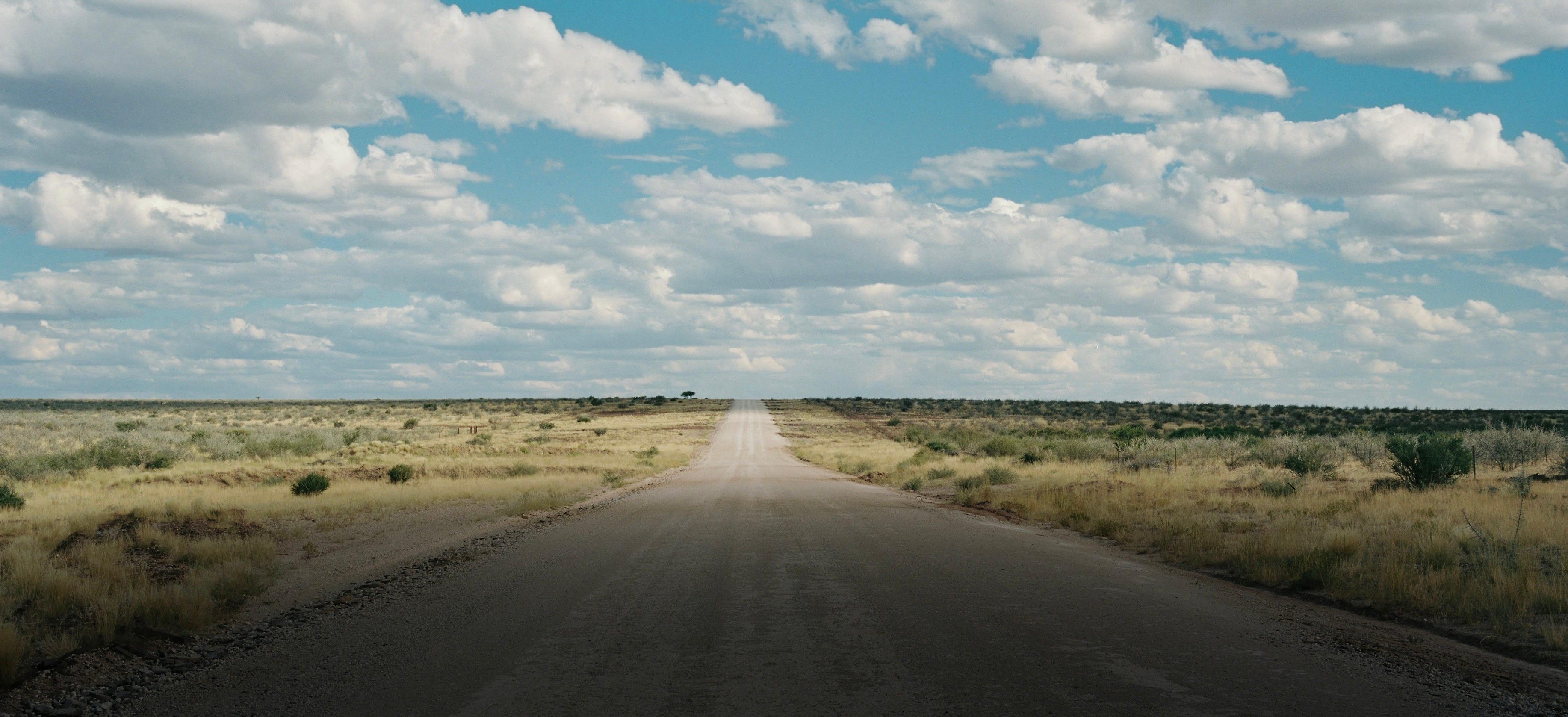
As I made my way out to the car lot at Namibia’s Windsoek airport, a tall, imposing Hertz agent asked me where I was headed. When I vaguely told him the Sonop region, he turned to me with a gravitas ordinarily reserved for Chris Nolan monologues: “any time you see a gas station, any time—even if your tank is 7/8th full—you fill up.” He then showed me how to switch between low and high four wheel drive, put a meaty hand on my shoulder, and promised that I’d do fine. Suddenly I wasn’t so sure.
Less than a minute out of the lot and driving on the left side of the road, the airport’s wifi gave out, my cell service never kicked in, and I was looking at a seven hour drive alone through the desert with nothing but print-out directions from the hotel and…a full tank of gas.
The first hour was a straight-forward jaunt, reminiscent of the road out to El Mirage lakebed in Palmdale, CA, minus the burned-down meth labs. Just as I was meant to turn right for the first time and continue straight for the following 153km, I came across a gas station and dutifully stopped. There, an attendant with piercing blue eyes asked the same question: “where are you headed”? But as locals began to swarm, asking me for sugar and flour from the mart, I was unsure if I should divulge my destination—a residue of stranger danger lingered somewhere inside me after scarring childhood admonitions and third-hand tall tales. When I finally did respond and his answer was to take some air out of my tires, I was really unsure what to do. But the piercing eyes won out and I nodded for him to go ahead before peeling out and saying goodbye to paved roads for the next three days.
It was half-way through the subsequent six hour trek, when I hadn’t crossed a single other car and nearly flipped mine over while foolishly driving twice the speed limit and simultaneously snapping pictures, that I realized just how remote I was. I was truly in the middle of nowhere. I’d told my wife where I was headed but I think she was reading an email when I gave her my general itinerary two weeks prior. The hotel was aware of my trajectory, but I had not seen a single sign of life—nor a single bar of reception—for three straight hours. For all the traveling I’ve done around the world, this was a first. It was only partially unsettling—more thrilling—and entirely refreshing. The main purpose of the trip was to shoot night skies for an upcoming project and the lack of any outpost or lamppost was a hint that I was in for a treat.
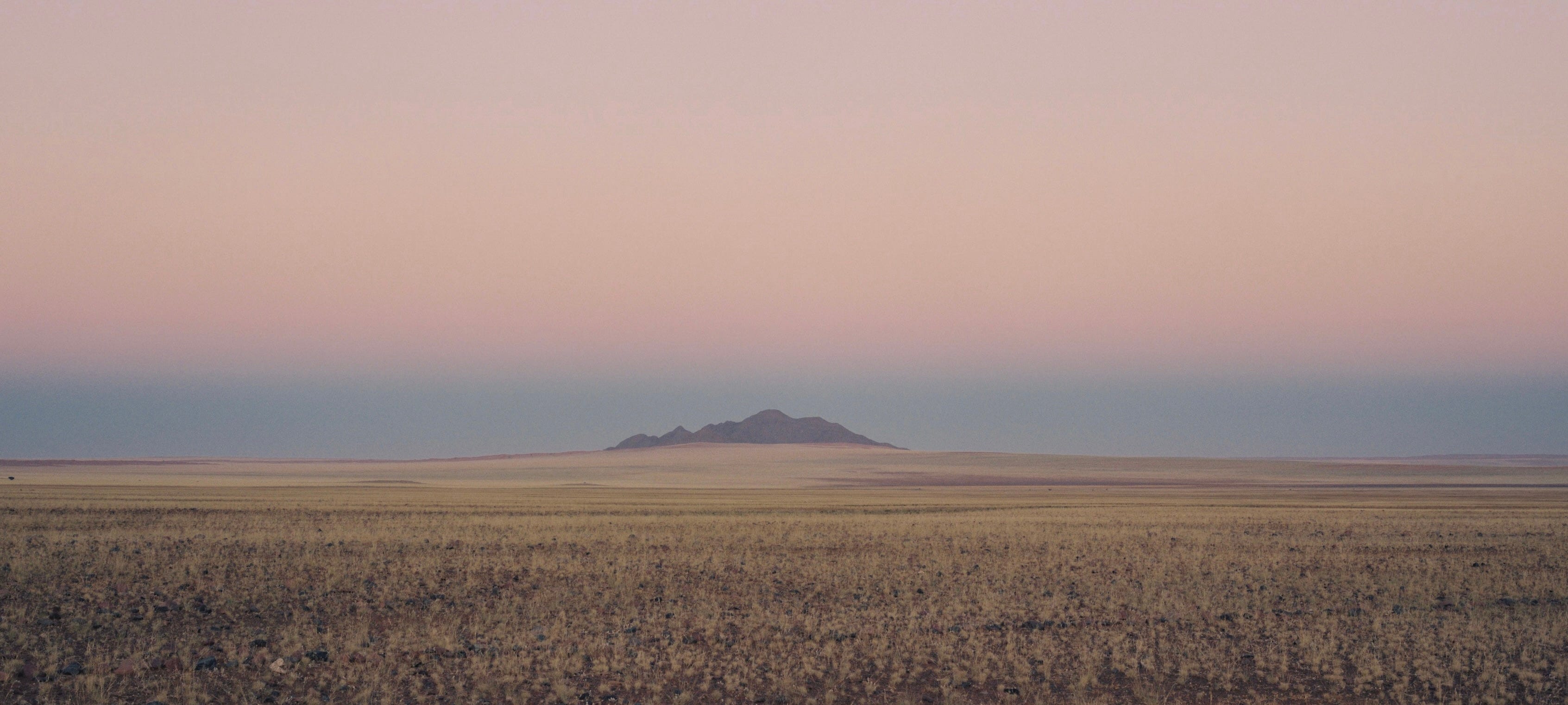
I finally arrived at the Zannier Sonop resort with the last few minutes of daylight stretching out across the horizon, the light as warm as the landscape’s dusty red earth. Parking my car by the stables that had once been part of a nearly 14,000 acre ranch, I was driven by vintage Land Cruiser a few miles to the base of the hotel: a towering pile of massive boulders plopped haphazardly in the middle of the desert like a game of marbles played between gods, upon which a dozen luxury tents had been erected. A golf cart chugged up a wooden boardwalk between the rocks like the start of a Disneyland attraction, and soon I was at the summit, greeted to a roaring fire and smiling staff. Surreal doesn’t begin to do justice to the experience. The five-course dinner complete with French cheeses and served in a tent alongside the the only two other hotel guests only pushed things further into the Twilight Zone—even within the confines of the hotel, one was constantly reminded of just how remote they were.
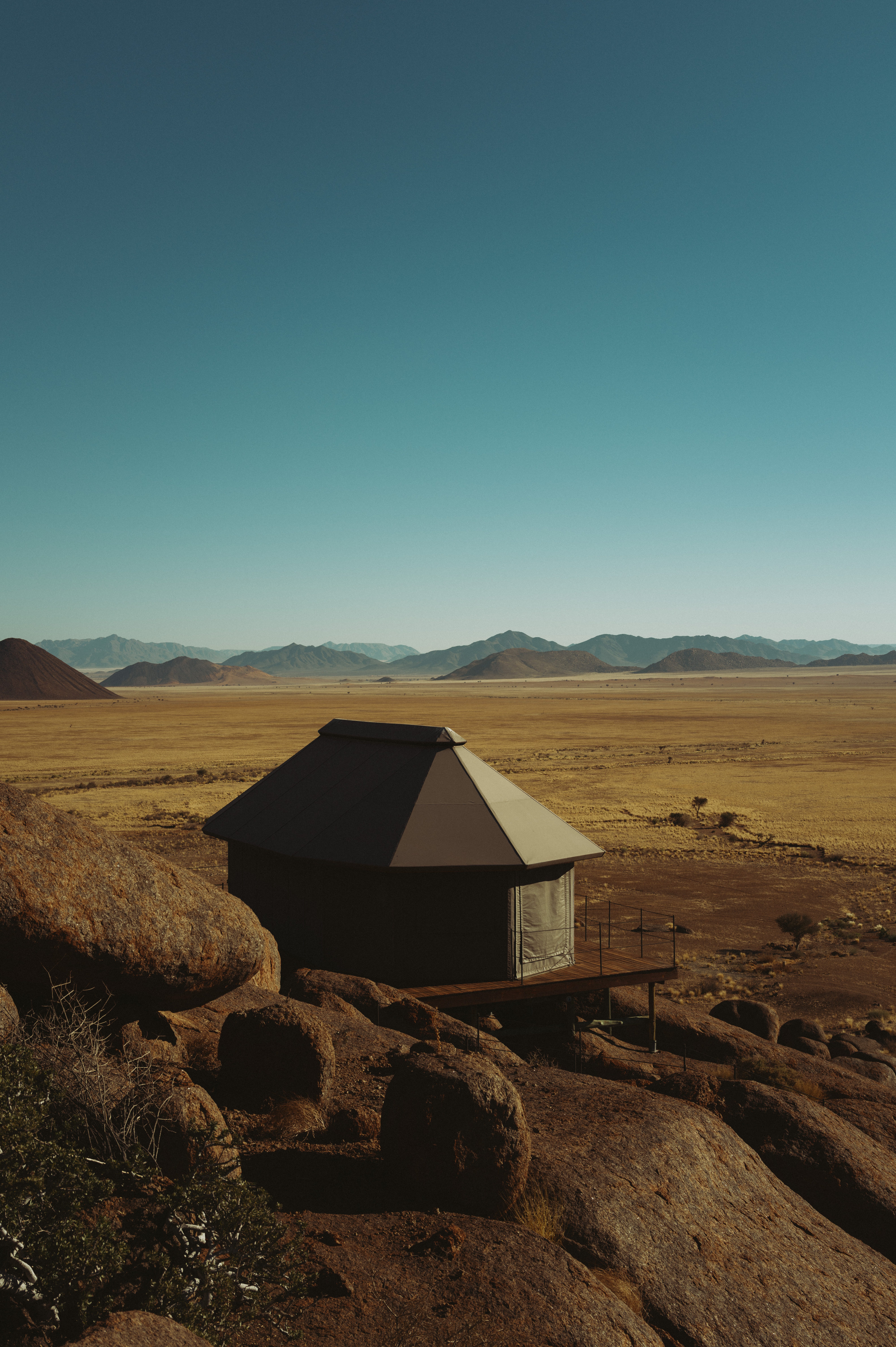
My time at Zannier passed by at its own lazy clip, unburdened by the outside world. Early morning walks and breakfasts atop the boulder mountain elapsed into massages and reading time in my tent as I waited for the brutal sun to fade in the afternoon. Even the swimming pool was off-limits in the mid-day heat, but by dusk there were car rides racing through the desert alongside seemingly stray packs of oryx. At night, as the wind began to pick up and howl, the one or two stray clouds pushed away, clearing the skies for the ultimate star-gazing session. An in-house astronomer, wielding a laser so powerful it appeared to directly hit distant planets, pointed to star clusters flipped upside down from the Northern Hemisphere. The Seven Sisters shined brighter than I’d ever seen them, Orion’s belt was diorentingly-skewed, but what struck me most was the depth of the universe in its utter darkness. I felt like I was seeing past everything I’d ever seen, and as if in the midst of a tech-filled pitch for a new TV, I was seeing levels of black so much richer and darker than ever before— Anish Kapoor by way of Neil deGrasse Tyson.
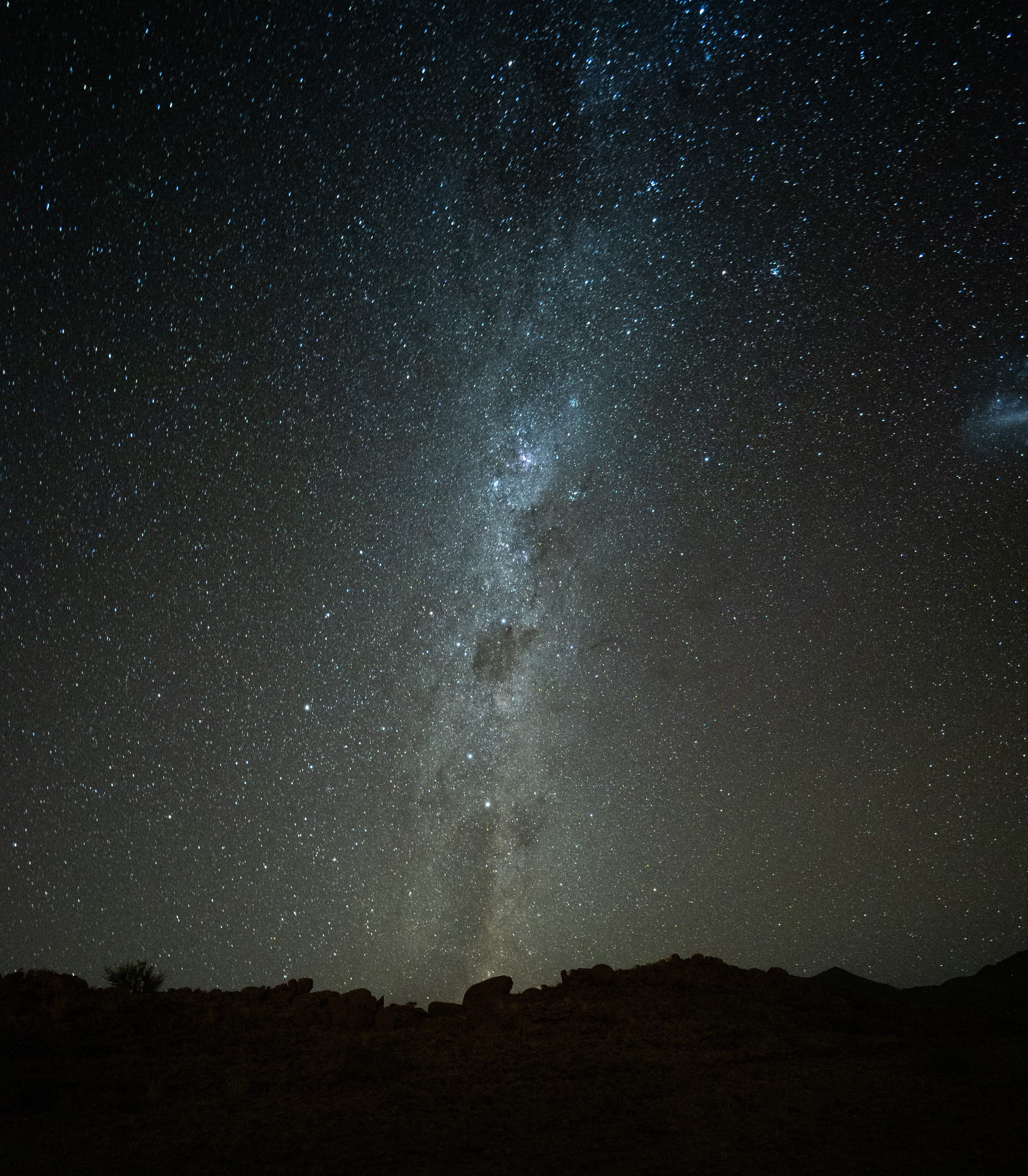
The hike I took up and over the world-famous Sossusvlei dunes the following morning was as spectacular as I had imagined it to be, but it was this night sky, this complete and absolute darkness pulsating with the shimmering specks from the farthest depths of our galaxy and beyond that will stay with me forever. The wind kept beating away at me, the astronomer kept rattling off esoteric star patterns, particles of iron-rich sand started blowing into the atmosphere, all of these things trying to interfere with this connection to outer-space that was forming between me and the universe, but nothing could stop it. There was a monumental silence that had been established that was absolute and unbreakable.
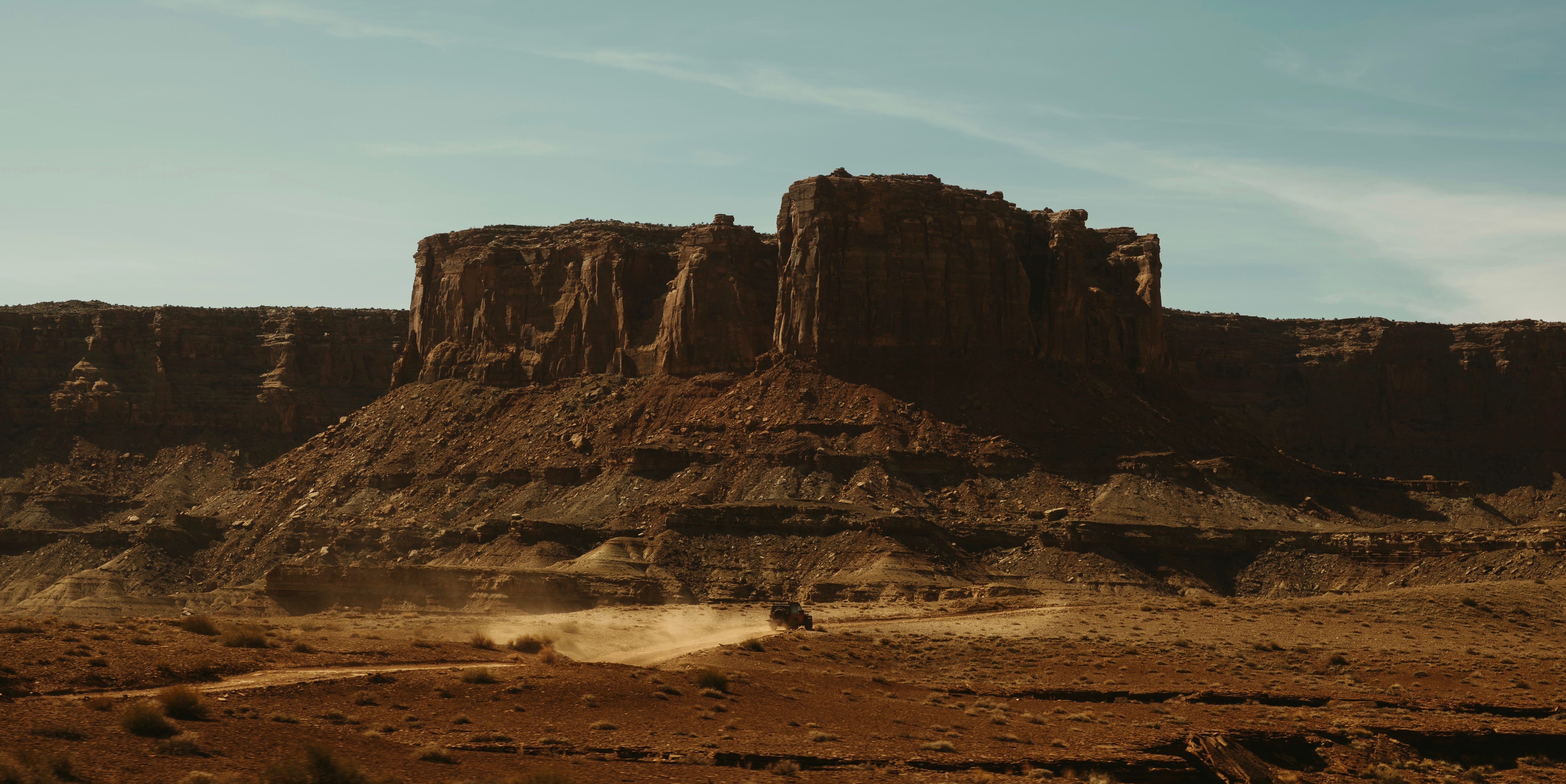
A month later I found myself in another 1980s Land Cruiser, half-way around the world, enduring one terrifying hair-pin turn after another down Shafer Road in Canyonlands National Park. My guide (and driver) Cody explained that the third-generation owner of his outfitter, Navtec, insisted on the older Toyota models because of all the dust and rugged terrain we were about to cover. Newer incarnations were so loaded up with technology that systems would invariably break down in this setting, and when you’re fifty miles into the White Rim Trail we were about to spend two days on, a tow is not an option. You needed reliability over gadgetry.
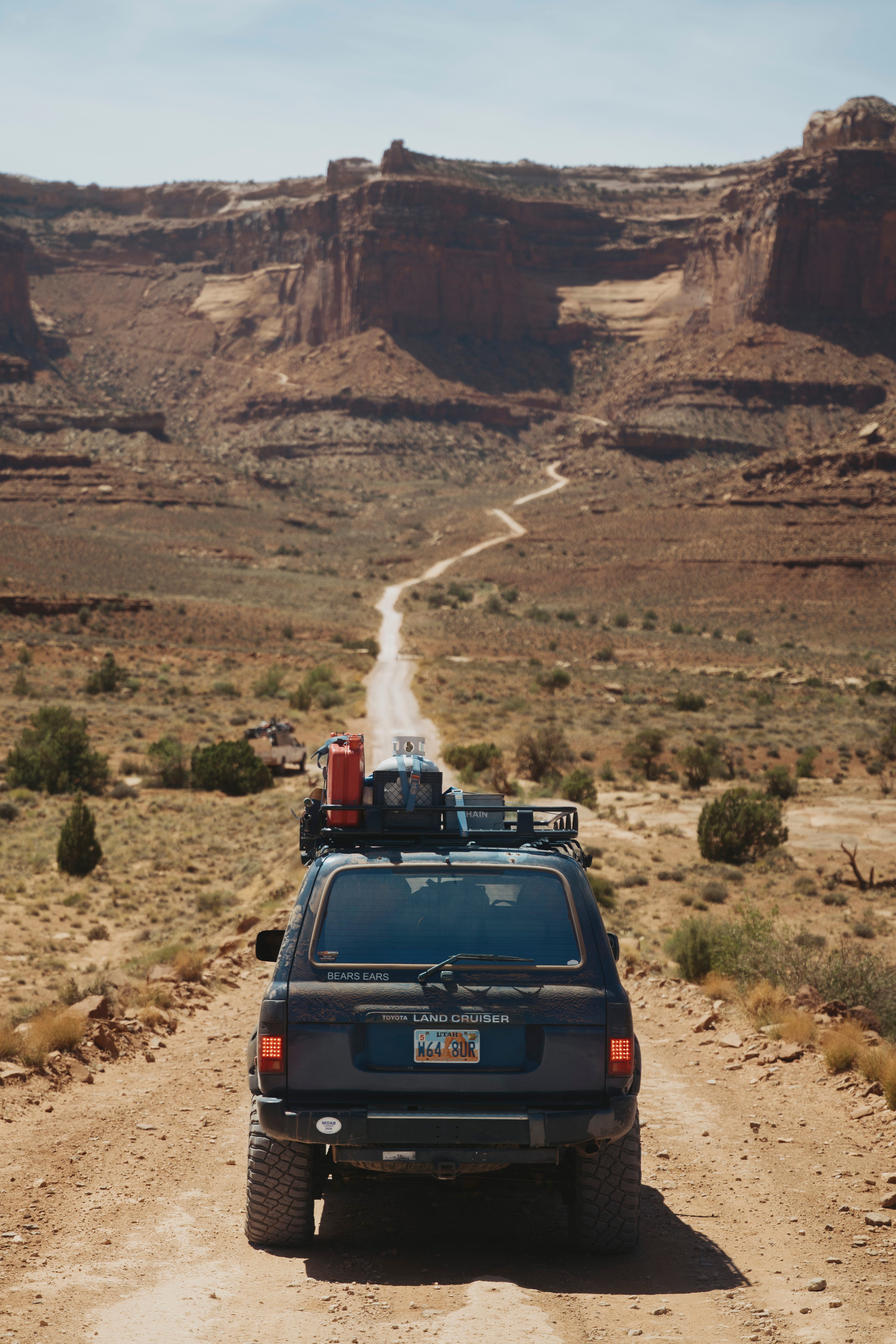
In my ongoing pursuit of unsullied night skies, I was headed to the most remote campsite in the Island in the Sky section of the sprawling park. While The Maze is considered the most untamed of Canyonlands’ three areas, the White Crack Campground I was bouncing towards is the furthest out within Island and is capped at one vehicle per night, making it an incredibly tough ticket and a perfect spot for a bit of quiet.
The White Rim Trail is about 100 miles in all, tracing the perimeter of a prehistoric series of erosions which created stunning sand formations that turn pink in post-sunset light and radiate blinding whiteness throughout the rest of the day. Altitude-wise, it’s the mid-level point of the park, half-way between the bottom of the basin of eroded desert and the top of a mesa about twice the size of Manhattan that, when looking up from the trail, appears to be an “island in the sky.”
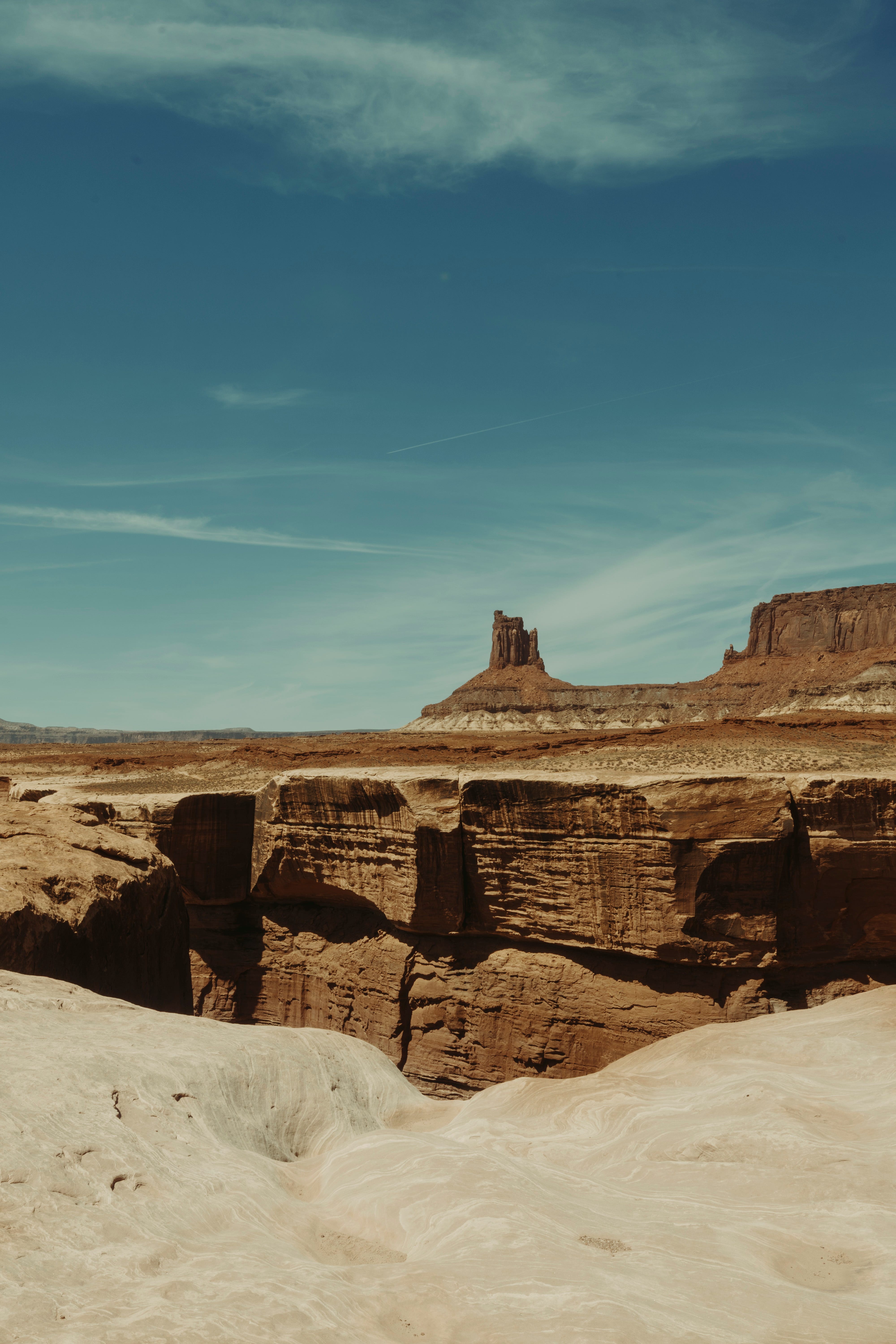
Most people elect to bike the entirety of the White Rim over the course of three days, working with local guides to arrange follow vehicles and meals. It is impossible to hike it in its entirety and were it not for the assignment I was on, I’m not sure it would have been my first choice for a two day drive either. It’s spectacular for sure, but the topography becomes a bit repetitive, and the cost of the chaperone is prohibitively expensive. There’s not much getting out of the car when you’re trying to get through 100 miles in two days while maxing out at 12mph, and when you do, it’s for a little quarter-mile jaunt to the very edge of the rim, an excuse to stretch your legs which have turned to jello after endless hours of rugged off-roading.
The best thing might be to book a half or full day trip (with Navtec) which will take you down Shafer Road—and a ways beyond—but still get you back to Moab in time for a tasty dinner at Thai Bella. (Note: unless you have serious off-road experience and an actual 4x4 car (meaning not an AWD SUV) do not attempt to tackle this trail on your own regardless of what some third-rate travel blog insists is possible.
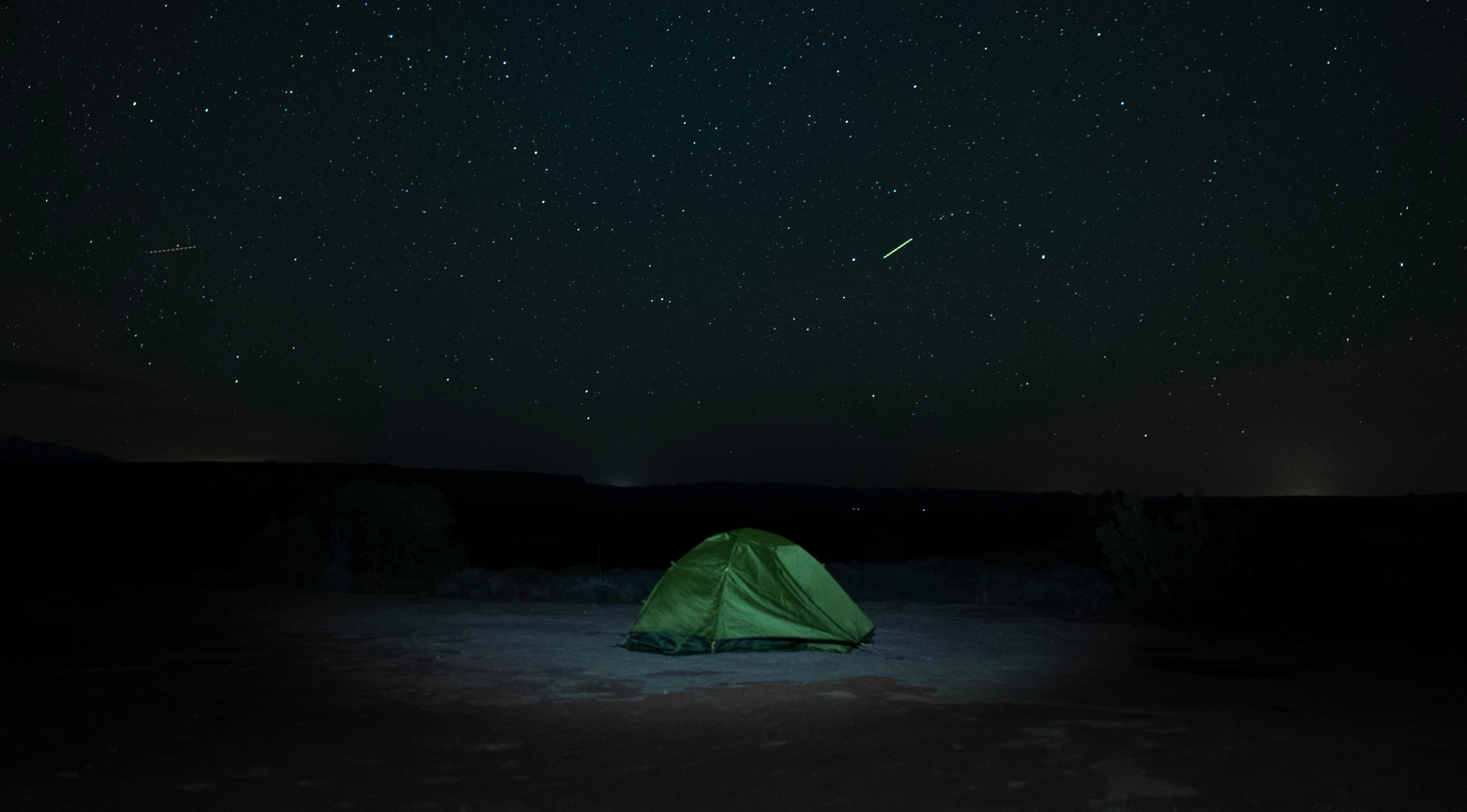
When we finally got to our campsite, I erected my tent while Cody set up a full grill and got fajitas going. After a lifetime of backpack camping this was my first time working out of a truck, and the luxury of having coolers, stoves, and other gadgets (folding chairs!!) felt like an Aman upgrade from nights of Stovetop stuffing on a little portable stove and frigid mornings with instant oatmeal. We wolfed down supper before rock-hopping our way around, dodging cryptobiotic soil in an elaborate game of hopscotch while venturing out to the narrow peninsula that extended before us.
The ensuing night sky was disappointing after the one I’d recently witnessed in Namibia—in the corner of my eye I could make out some of Moab’s light pollution and the stars themselves felt fainter, dustier. But what I will never forget was the silence: as great and powerful as Namibia’s endless starscape, the quiet I experienced at dusk here in Canyonlands was unlike any other. At a certain moment a bird flew about twenty feet over my head, and in the supreme stillness I could hear its wings pushing the air around it. I’d never heard that in my life.
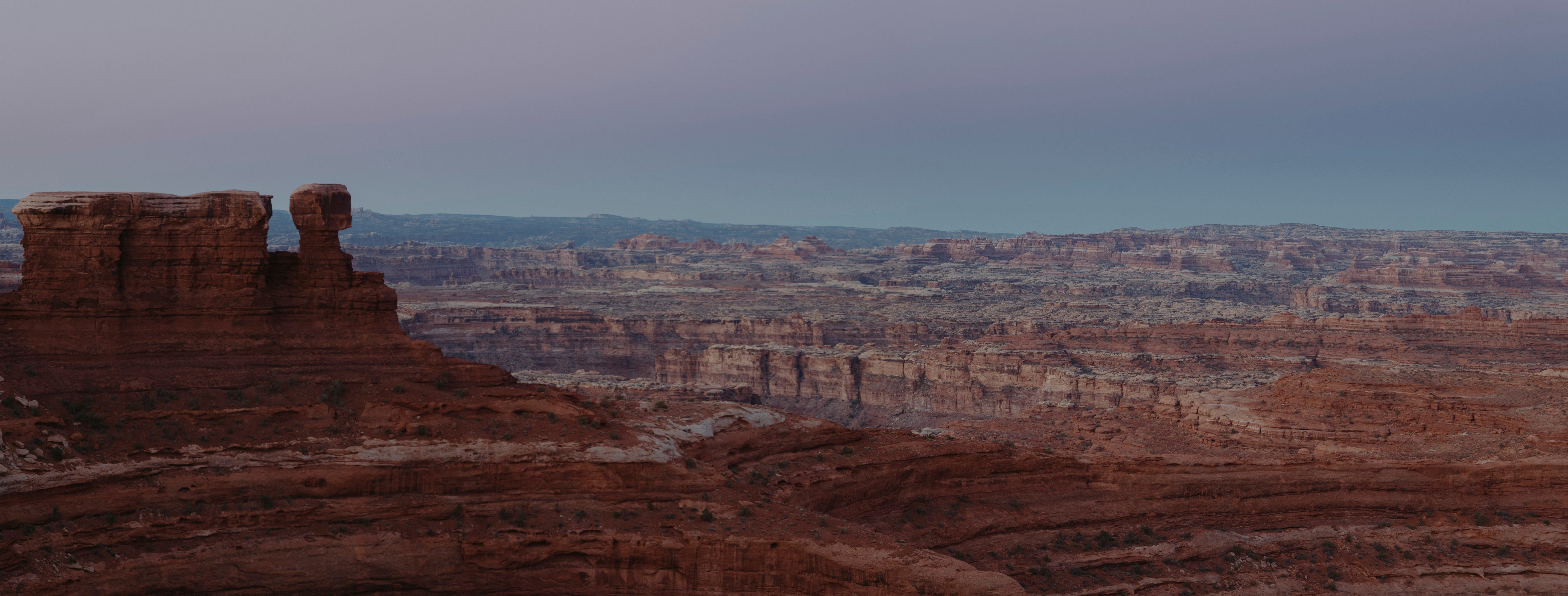
I’ve always championed hitting the road and venturing out on the trail—the first Tripping post was a guide to Utah’s National parks, some of my favorite holidays have been those spent along the Presidential Range of the Appalachias—but these days so much of my spare time is spent hunched over a phone listening to the latest trivialities from food bloggers and stand-up comedians while electric blue light forces itself down my rods. I was so grateful to have two moments of absolute, majestic, universe-sweeping, NOTHING. Here a silence so pure it made my eardrums feel bionic, there a darkness so vast it made my brain melt.
To encounter these opportunities we need to stray further and further out. The week before the trip to Namibia I’d been on a hike along a desolate stretch of Indian Ocean coastline but had not found the utter darkness I’d witnessed in Namibia. The week before Utah I’d been in the West Texas desert but distant rail lines and nearby crickets peppered the audioscape. I realize the two trips I’ve outlined here are not practical for all, but it is precisely their impracticality that allow them to offer what is getting harder and harder to find and more and more vital to experience. I encourage you to seek out absolute silence, visual, aural, or both, if only for a night, wherever you are. It’s not life-changing but it is certainly life-affirming.